
Situated in the southwestern part of Uganda, Bwindi Impenetrable Forest National Park is one of the most spectacular and sought-after protected areas in Africa and the world at large, thanks to its incredible biodiversity.
This park lies at the rim of the western rift valley covering an area of about 331 square kilometres and surrounded by Kisoro, Rukungiri and Kabale districts. It features among the very few protected areas in the African continent that thrived throughout the last ice age and stands at altitudes ranging from 1160 meters in Ishasha gorge to 2607 meters at Rwamunyonyi peak.
This park lies at the rim of the western rift valley covering an area of about 331 square kilometres and surrounded by Kisoro, Rukungiri and Kabale districts. It features among the very few protected areas in the African continent that thrived throughout the last ice age and stands at altitudes ranging from 1160 meters in Ishasha gorge to 2607 meters at Rwamunyonyi peak.
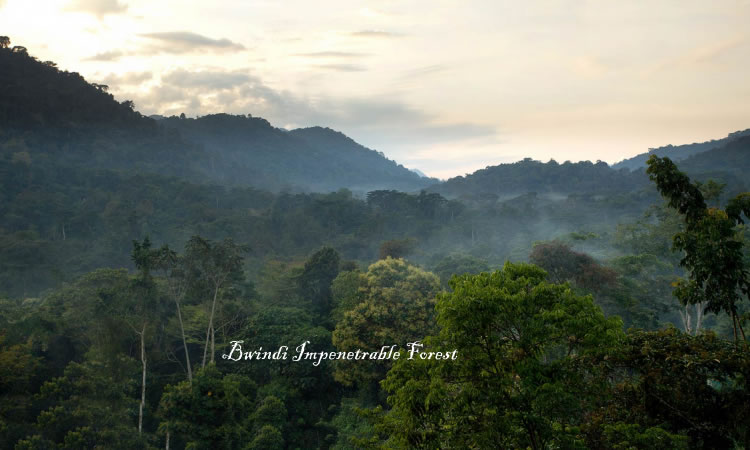
Bwindi Impenetrable National Park
Bwindi National Park has an average annual temperature range of 7 to 20 degrees Celsius, with its coldest period falling between June and July. Heavy rains are experienced from March to May and from mid-October to November. The park was established in 1992 primarily to provide refuge to over 400 endangered mountain gorillas that thrive within its thick jungles, representing approximately half of all individuals in the world today.
This stunning conservation area is also proud of its unique mammal species that make up a total of around 120 including the 11 primate especially the black and white colobus monkeys, chimpanzees, blue monkeys, red tailed monkeys, olive baboons; 27 frog species, 30 elephants, and not to forget its over 360 bird-life, 23 of which are highly localized Albertine rift endemics and 14 of them can’t be spotted any part of the country (the notable birds include the African green broadbill, brown necked parrot, white tailed blue flycatcher and frazers eagle owl); 324 distinct species of trees with about 10 of them that you won’t get anywhere in Uganda (its afro montane forest features thick under storey of vines, shrubs, and ferns), 200 butterflies with 8 of them that are endemic to the Albertine rift and others. The park is surrounded by tribes such as the Bakiga and the Bafumbira, and a few marginalised Batwa pygmies.
What to do in Bwindi Impenetrable National Park
- Mountain gorilla tracking
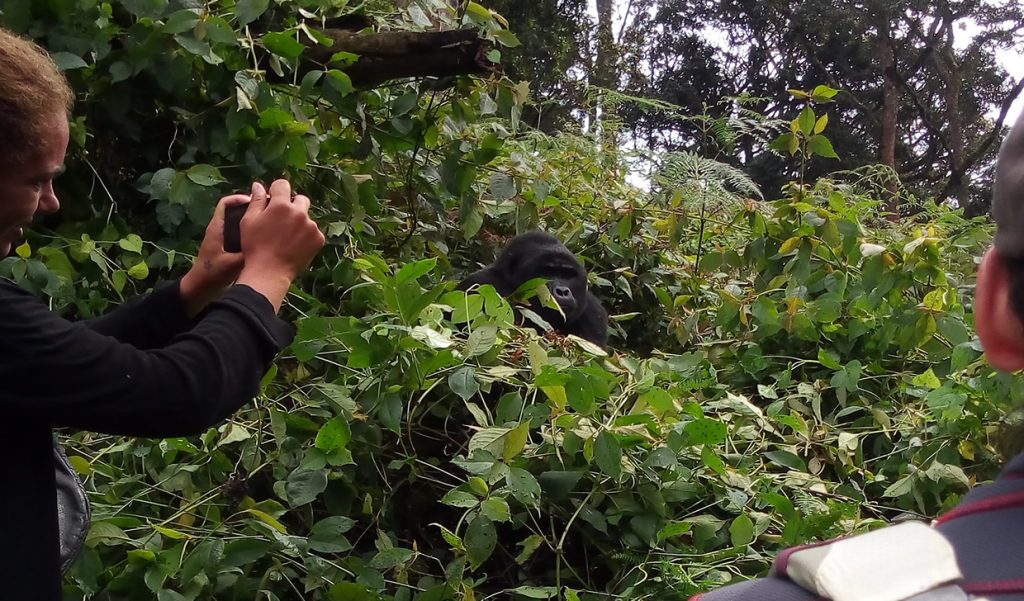
Gorilla Trekking in Bwindi Forest National Park
Mountain gorilla adventures feature among the main highlights for most safaris in Bwindi National Park. About 460 individuals of these rare primates live in the jungles of Bwindi, and over 20 gorilla families have been habituated for visitors to track each day. These include the Mubare family, which is the oldest group in Bwindi and the first to be officially opened for tourist visitation.
Others include Habinyanja, Rushegura, Nkuringo, Nshongi, Kahungye, Busingye, Bitukura, Oruzogo, Bweza, Mishaya, Mukiza, Kyaguriro and others.
For lifetime experiences with these apes, there are 4 main tracking sectors: Buhoma, Rushaga, Nkuringo, and Ruhija. Only 8 visitors are assigned to a habituated gorilla family each day, and gorilla trekking permits cost $800 per visitor. Due to high demand, you are required to book your permit in advance to avoid disappointment.
- Birding
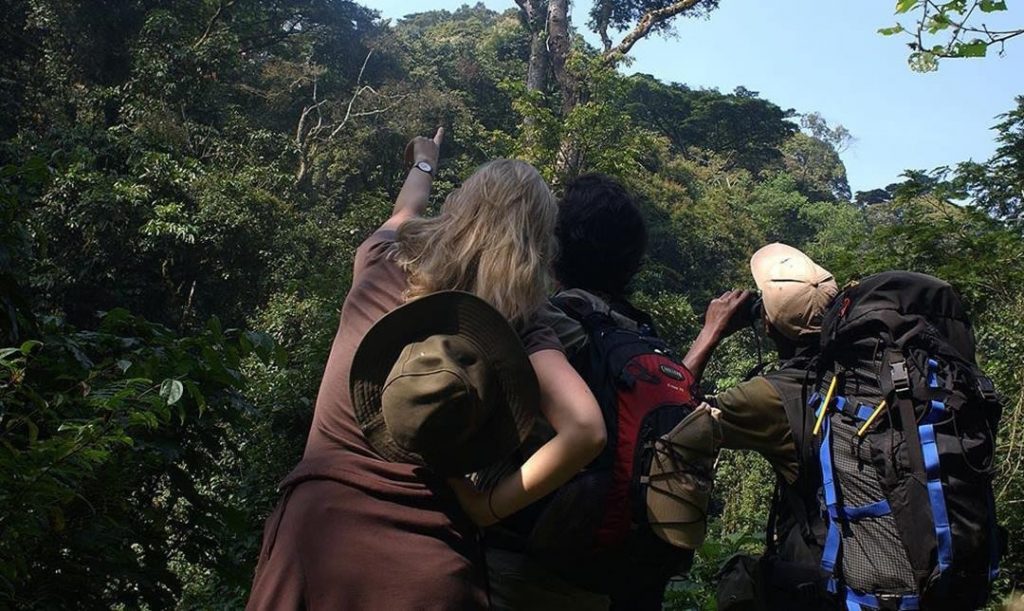
Birders in Bwindi Forest National Park
With over 360 bird species, Bwindi Impenetrable Forest National Park is undeniably one of the birders’ paradises that shouldn’t be missed off your bucket list. While on your birding adventure, you will have a chance to spot out most of the bird species like the African green broadbill, yellow eyed black fly catcher, short tailed warbler, rusty faced woodland warbler, bar tailed trogon, wilcock’s honey guide, Gruer’s rush warbler, dusky crimson wing, kivu ground thrush, white tailed blue monarch and many more. For bird lovers, never forget to come with your camera and binoculars.
- Nature walk
This is another remarkable safari activity that you shouldn’t miss out on your bucket list. Bwindi National Park features several hiking trails, each offering rare attractions. Visitors on a nature walk through the park have the opportunity to spot most of the primates, birds, butterflies, tree species, and others. Hiking adventures in Bwindi take visitors through the River Munyanga walk, Rushura walk, the bamboo trail walk, Ivy River walk, Muzabajiro trail, Ruizi river trail and others.
- Cultural encounters
After your breathtaking mountain gorilla adventure, you can embark on cultural encounters in the nearest local communities to enjoy the most thrilling traditional and cultural performances that will be presented by women’s groups, especially by the Batwa pygmies.
Getting to Bwindi Impenetrable National Park
Bwindi National Park is accessible both by road and by air.
By road, visitors can expect to spend 8-10 hours driving from Kampala city centre or Entebbe Airport to Bwindi Impenetrable National Park.
By air, you can fly from Entebbe International Airport or Kajjansi Airstrip to Kisoro airfield or Kihihi airstrip and then connect by road up to the park. Aerolink Uganda has daily scheduled flights from Entebbe to Bwindi Gorilla Park.
Where to stay in Bwindi Impenetrable Forest National Park
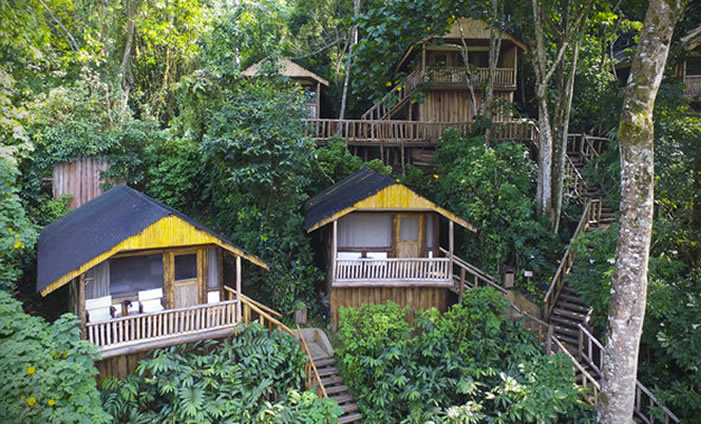
Buhoma Lodge – Bwindi Forest
There are numerous lodges where you can spend the night while on safari in Bwindi Impenetrable Forest National Park. They include: Volcanoes Bwindi Camp, Chameleon Hill Lodge, Gorilla Forest Camp, Gorilla Resort, Mantana Camp, Four Gorillas lodge, Buhoma Community Rest Camp, Bakiga Lodge, Broadbill Forest Camp, and others.
Best Time to Visit Bwindi Impenetrable National Park
Whereas Bwindi Impenetrable Forest National Park is considered an all-year-round safari destination, intending visitors can best explore it during the dry seasons, which run from June to September and from December to February. However, you can also visit during the wet season, which usually runs from March to May and October to November.
To most visitors, Bwindi Gorilla Park features a mystical forest that offers refuge to some of the most exceptional natural wonders, ranging from primates, avian species, plants, trees, and reptiles to mammals, all of which are worth exploring while you are on a safari in Uganda.