
Western Uganda is gifted with a variety of physical features which attract tourists. These include, but are not limited to: Lake Mburo National Park, Queen Elizabeth National Park, Rwenzori Mountains National Park, Bwindi Impenetrable National Park, Mgahinga Gorilla National Park and Semuliki National Park.
Among the most attractive features are the hot springs in Semuliki National Park. Scientists describe a hot spring as a spring produced by the emergence of geothermal-heated groundwater from the earth’s crust.
Hot springs form when water comes into contact with heated rock. If water percolates deeply enough into the crust, it will be heated as it comes into contact with hot rocks.
Hot springs form when water comes into contact with heated rock. If water percolates deeply enough into the crust, it will be heated as it comes into contact with hot rocks.
Hot springs form when cracks extend downward toward the exceedingly hot temperatures of the mantle, and water seeping downward is heated and forced back up under pressure, forming bubbles. Uganda’s hot springs are found in four main locations: around Murchison Falls National Park area, Fort Portal area, Queen Elizabeth National Park area and Bwindi Impenetrable Forest National Park area.
1. Fort Portal Area
Semiliki National Park, situated in south-western Uganda, allows visitors to trek for gorillas in Bwindi Impenetrable Forest National Park. In this park, hot springs are the major tourist attraction. The hot springs here include;
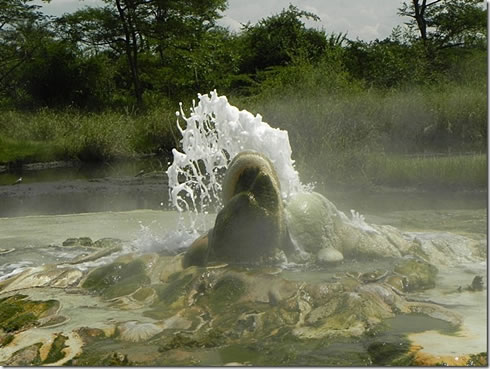
Sempaya hot springs are Semiliki’s most famous attraction. They are set in a lush, swampy clearing near the southeastern corner of the Semiliki forest. These two hot springs are at two sites and are distinct from each other. There is the Female Spring and the Male Spring.
The female spring has water boiling at 103 degrees and spurts hot water up to 2m above the ground, while the male spring is farther away and is reached by following a trail.
Water from hot springs is believed to cure certain diseases, for example, ringworm. There are also legends and customs related to the hot springs, which you will learn in detail with the help of a professional tour guide.
The female spring is visited by women seeking a cure for infertility and other problems. Communities living near hot springs in Uganda usually have both spiritual and superstitious attachments to them. Uganda’s hot springs are often popular tourist destinations and locations for rehabilitation clinics for those with disabilities. The trail to the springs leads you through a patch of rain forest where red-tailed monkeys, grey-cheeked mangabeys, and black-and-white colobus are common. Bird-watching safaris are also stunning; you will see various bird species, including the forest hornbill. Tourists have been seen boiling eggs, cassava, and green bananas in the two geothermally heated springs.
Buranga Hot Springs
Fort Portal is one of the nearest towns to the Rwenzori Mountains, making it the best stopover town before heading to Buranga Hot Springs. On your way to the hot springs, you are welcomed through the lowland tropical rain forest.
The only edge that Buranga hot springs have over Sempaya hot springs is the number of hot springs. Buranga hot springs are three hot springs located within walking distance of each other. These are Mumbuga Springs, Nyansimbe Springs, and Kagoro Springs. These are all recommended en-route activities for Kibale Forest National Park and the Rwenzori Mountains.
Rwagimba Hot Springs
When you think of hot springs in Uganda, you need to identify the most unique of all hot springs, and this is the Rwagimba hot springs found in the River Rwimi in Bunyangabu district. Besides the common stories of this river flooding during the rainy seasons, Rwagimba hot springs offer steam baths that draw multitudes to the area.
It is also a recommended en-route destination for Kibale Forest National Park, the Rwenzori Mountains, and Bwindi Impenetrable Forest National Park.
2. Queen Elizabeth National Park Area
The closest hot spring to the Queen Elizabeth area is Kitagata Hot Springs.
- Kitagata Hot Springs
The hot spring is located one kilometre from the Kitagata trading centre and has water temperatures as hot as 80 degrees centigrade. The springs also have historical importance as one was used by the King of Ankole and hence referred to locally as ‘Ekyomugabe’, the King’s Spring, while the other adjacent one is more known for its medicinal value and referred to as Mulago in reference to Uganda’s national referral hospital, which is Mulago. Kitagata hot springs are a must-visit for anyone visiting the Bushenyi district and are on the route to easily connect to Queen Elizabeth, Bwindi, and Lake Mburo National Parks.
Many visitors travel to Kitagata to treat themselves to the hot baths or just to catch a glimpse of people bathing in these natural hot Spas. Kitagata hot springs are also well known for their curative waters. Patients from as far as 100 km flock to the springs to soak in the spring waters to heal, and some patients drink the sulphur-rich waters of the hot springs for a cure for rheumatism and arthritis.
Medical research is yet to be conducted to prove the claims of the above cures. Among all the hot springs in Uganda, Kitagata hot springs might be the busiest, attracting over 20 people on a good day who try to take a bath in this natural warm water, as well as boil eggs, cassava, bananas, and sweet potatoes in the springs’ hot water. The hot springs have several pools just around them, from which people collect warm water for drinking while at the springs.
3. Murchison Falls National Park Area
Amoropii hot springs
Uganda also has the Amoropii hot springs in northern Uganda, which are believed to do miracles for their visitors. These hot springs are rooted in the worship traditions of the Alur people because they are believed to have divine powers. Amoropii hot springs got their name from the Alur word for ‘hot water’. “Amoro” means hot, and “pii” stands for water.
It is believed that barren women bathe in the hot spring, as well as those in need of a fairer and tender skin. However, one must first obtain permission to visit these springs, and illegal visits may result in problems such as snake bites.
It is believed that barren women bathe in the hot spring, as well as those in need of a fairer and tender skin. However, one must first obtain permission to visit these springs, and illegal visits may result in problems such as snake bites.
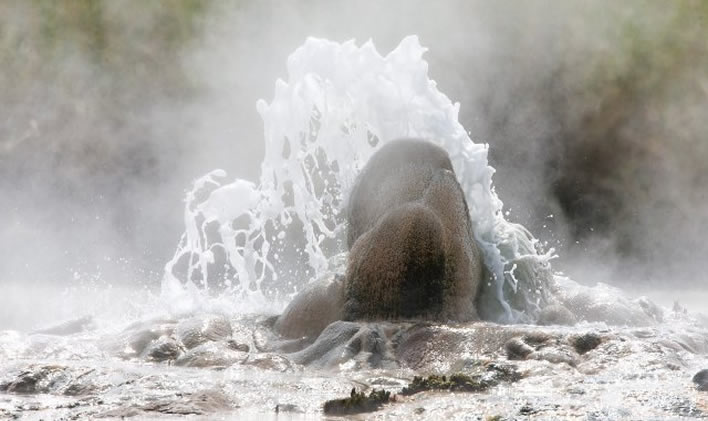
It is also believed that hot springs are associated with traditional beliefs; for example, every six months, they slaughter a large sheep as a sacrifice to the gods of Amoropii. The meat is left in the open, and the following day, it’s gone. It is believed that the gods of Amoropii take it.
- Kibiro Hot Springs
Kibiro Hot Springs are among the least known and least visited hot springs in Uganda. This is partly because it is located farther from the other hot springs. However, with a well-planned itinerary and good safari cars, the place can easily be accessed on a non-rainy day. It is also a recommended en-route destination if you are coming from Murchison Falls National Park, heading to Kibale Forest National Park, or accessing Murchison Falls National Park via Hoima town.
4. Bwindi National Park Area
There is one Hot spring highly recommended for anyone doing gorilla trekking in Bwindi Impenetrable Forest National Park and visiting Lake Bunyonyi: Ihimba Hot Springs.
- Ihimba Hot Springs
These hot springs are located in Kabale, western Uganda. They have a long history of the Bahima people, which makes them a special destination for anyone who loves culture. You can also visit the local Bahima people in this area, adding a cultural feel to your Western Uganda trip and a taste of hot spring scenery.
Like all the other hot springs in Uganda, Ihimba hot springs has a long history of notable healing among local people, though it is not yet scientifically proven.